Visibility
Hard to find, harder to visit
A farm down a lane with no clear Google listing, no opening hours and no idea whether the strawberries are ready this week.
Ads and visibility: customers who are looking for your service now or don’t know about it yet.
01 Google AdsEnquiries from people searching for your service right nowfrom £480/mo 02 Social media adsMeta, TikTok, LinkedIn: customers who are not searching yetfrom £480/mo 03 SEOHigher in Google and Maps without paying per clickfrom £430/mo 04 Visibility in ChatGPT and AIYour business in AI assistant answerspart of SEO 05 Amazon, eBay and marketplacesSell where customers already buywith a partnerThe place where a visit turns into an enquiry, and a system that doesn’t lose that enquiry.
01 Web designA website that turns visits into enquirieslanding from £400 02 Online shopsCart, payments and shipping, ready for adsfrom £1,300 03 CRMNo enquiry gets lost in a phonesetup £620 04 Chatbots and AIThey answer customers, at night too£310 05 Email and SMSCustomers come back instead of forgetting youquoted individuallyPlan and tracking first, budget second. You know what works before you spend more.
01 Strategy and auditKnow where to spend the budget before you spend it£500 02 AnalyticsSee which ad brings in money£240 03 ConsultationsA call about your specific problem£25/h 04 Free auditA quick review and 3–5 priorities to start£0How your business looks and sounds before anyone calls you.
01 Social media managementProfiles that look like a real businesswith a partner 02 Creative and videoGraphics and videos that stop the thumbquoted individually 03 BrandingA logo and style that set you apartwith a partner Edmonton, Canada
website with a 3D calculator and a CRM
Boreal Kitchens
 Winnipeg, Canada
website and CRM in one system
Adela Strycharz, REALTOR®
 Żywiec, Poland
500+ page website and CRM for a chain
Gładko Tnący Barber
 Warsaw, Poland
website in 4 languages, calculators and CRM
MagCleaning
Commodity prices are set somewhere else. Selling direct is where you set your own. Marketing for farms brings farm shop customers.
Free: a 30-minute call, an action plan and a price range in writing.
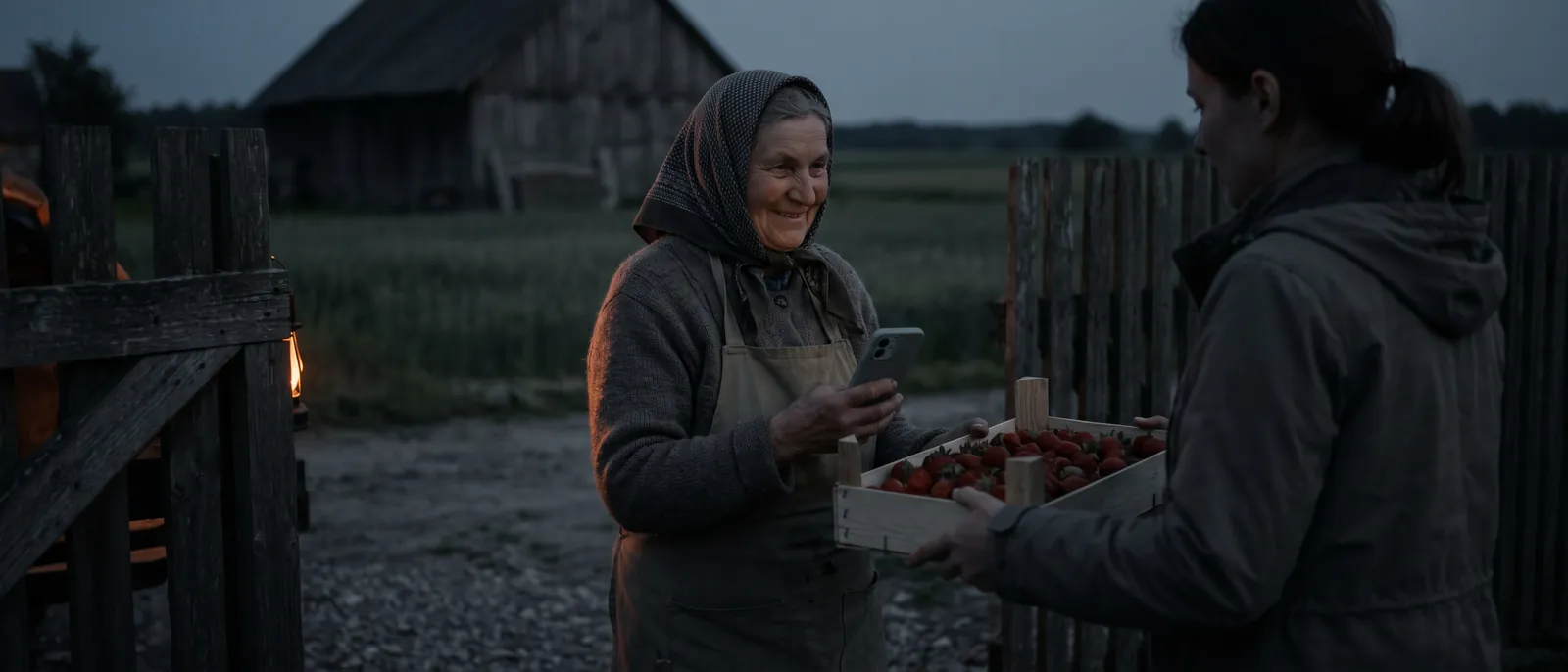
A farm down a lane with no clear Google listing, no opening hours and no idea whether the strawberries are ready this week.
Meat boxes and Christmas turkeys organised through a phone and a notebook. It works until it does not.
Lambing, harvest and the daily work come first. Posting and updating the website falls to the bottom of the list.
Before calling, customers read reviews. I help you collect them and reply in a way that builds trust.
An accurate profile with seasonal hours, what is in stock or ready to pick, photos and directions that avoid the wrong farm gate.
Meat boxes, veg boxes, eggs and Christmas orders paid online with collection or local delivery slots.
Glamping, holiday cottages, farm tours, pumpkin picking and events booked and paid in advance.
"Strawberries ready this weekend" shown to families within a sensible drive, timed to the weather and the crop.
For restaurants, butchers and retailers: what you supply, volumes, delivery days and a trade enquiry form.
Delivery orders on the business's own website with a CRM behind them. The same setup works for meat boxes and farm shop collections.
See the case study →Online booking with packages, the model for glamping weekends or farm experiences sold as one product.
See the case study →What you sell direct, your seasons and how much time you have for marketing.
Google listing, website, social pages and nearby competitors.
Ordering or booking, seasonal pages and a simple panel to update stock.
Ads and emails planned around crops, holidays and events.
A one-page site with opening times, products, map and analytics.
Ordering and payment for boxes, farm shop collections and Christmas orders.
Local Facebook and Instagram ads for seasonal events and products.
Marketing for farms in the UK has become more important as many farm businesses look for income beyond commodity prices and changing support schemes. Diversification takes many forms: a farm shop, a butchery counter, meat and veg box schemes, pick-your-own, pumpkin patches, Christmas trees, glamping, holiday cottages, wedding barns, educational visits. Each of these is a small consumer business with its own marketing needs, sitting on top of a farm that already takes all the hours available.
The approach that works is simple and low-maintenance: get found, make it easy to buy or book, and tell people when something is ready.
Most visitors find a farm shop or a PYO field on Google Maps. An accurate profile with seasonal opening hours (and bank holiday changes), photos of the shop and produce, the right categories and a pin that leads to the correct entrance is the foundation. Many rural businesses lose customers simply because the map sends them to the wrong lane. The method is on my local SEO page, and the market town marketing guide covers selling in smaller communities.
Taking orders by text message works for a dozen customers. Beyond that, an online shop for boxes, eggs, Christmas turkeys and hampers saves hours and mistakes: customers pick, pay and choose a collection or delivery slot, and you get a clear list for each day. Customer details stay with you, which makes the next season's marketing much cheaper. For glamping and farm stays, online booking with deposits matters even more, because guests expect to book at any hour.
Farm products are seasonal, and the message is often time-sensitive: strawberries this weekend, lambing open days, pumpkins from mid-October, Christmas trees from the end of November. Local Meta ads aimed at families within a reasonable drive, combined with an email to people who signed up (with consent), work well for this. When the weather turns or the crop is late, campaigns can pause with a click. The seasonal marketing calendar helps plan around school holidays and bank holidays.
Not every farm business sells to the public. Agricultural contractors, machinery dealers, feed and seed suppliers and growers supplying restaurants and retailers need B2B pages: what you supply, coverage area, minimum volumes, delivery days and a trade enquiry form. Agricultural shows such as the Royal Highland Show, the Great Yorkshire Show or the Royal Welsh Show remain important meeting places; a landing page for the show and quick follow-up afterwards make them pay.
Rural mobile coverage is often weak, so pages must load quickly on a poor signal. Some customers are older and prefer to phone, so the number should be prominent. In Wales, many farm businesses choose bilingual pages; the Welsh text comes from your own team or translator, and I build the site to handle both languages.
I work remotely with farms across the UK, from Lincolnshire around Lincoln and Norfolk around Norwich to Devon and the Scottish Borders, and reply within one working day.
An accurate Google listing with seasonal hours, a simple website you can update from your phone in a couple of minutes, and one email or post when something is ready. I set things up so updating stock or opening times takes less time than answering the phone.
Yes, many farms do, but food hygiene, labelling and cold-chain delivery rules apply. Check registration and labelling requirements with your local authority and the Food Standards Agency. I build the ordering and payment side; the food safety side stays with you and your advisers.
If you are a member and the scheme's rules allow it, yes. Assurance schemes, organic certification and breed society membership are meaningful to many buyers. Only show what you hold, and keep the wording exactly as the scheme permits.
Usually not at first. Google Maps, a good website and local Meta ads before key seasons tend to give better value. Google Ads helps for glamping, holiday lets, weddings in a barn or Christmas trees, where one booking or order is worth more.
Yes. A page for the show, a way to collect contacts on the stand with proper consent and a follow-up email afterwards turn a busy weekend into customers for the year.
Tell me what you produce or offer, where you are and your busiest seasons. I reply within one working day.
What do you need most?