Quality
Cheap leads, few sales
One channel produces lots of enquiries that never become customers; another produces fewer but better ones.
Ads and visibility: customers who are looking for your service now or don’t know about it yet.
01 Google AdsEnquiries from people searching for your service right nowfrom £480/mo 02 Social media adsMeta, TikTok, LinkedIn: customers who are not searching yetfrom £480/mo 03 SEOHigher in Google and Maps without paying per clickfrom £430/mo 04 Visibility in ChatGPT and AIYour business in AI assistant answerspart of SEO 05 Amazon, eBay and marketplacesSell where customers already buywith a partnerThe place where a visit turns into an enquiry, and a system that doesn’t lose that enquiry.
01 Web designA website that turns visits into enquirieslanding from £400 02 Online shopsCart, payments and shipping, ready for adsfrom £1,300 03 CRMNo enquiry gets lost in a phonesetup £620 04 Chatbots and AIThey answer customers, at night too£310 05 Email and SMSCustomers come back instead of forgetting youquoted individuallyPlan and tracking first, budget second. You know what works before you spend more.
01 Strategy and auditKnow where to spend the budget before you spend it£500 02 AnalyticsSee which ad brings in money£240 03 ConsultationsA call about your specific problem£25/h 04 Free auditA quick review and 3–5 priorities to start£0How your business looks and sounds before anyone calls you.
01 Social media managementProfiles that look like a real businesswith a partner 02 Creative and videoGraphics and videos that stop the thumbquoted individually 03 BrandingA logo and style that set you apartwith a partner Edmonton, Canada
website with a 3D calculator and a CRM
Boreal Kitchens
 Winnipeg, Canada
website and CRM in one system
Adela Strycharz, REALTOR®
 Żywiec, Poland
500+ page website and CRM for a chain
Gładko Tnący Barber
 Warsaw, Poland
website in 4 languages, calculators and CRM
MagCleaning
End-to-end analytics follows a customer from the ad they clicked to the invoice they paid. Standard tracking stops at the enquiry; this carries on through your CRM to the quote, the job and the money. You see which channels bring customers who actually buy, what each one costs, and which leads aren't worth chasing.
Free: a 30-minute call, an action plan and a price range in writing.
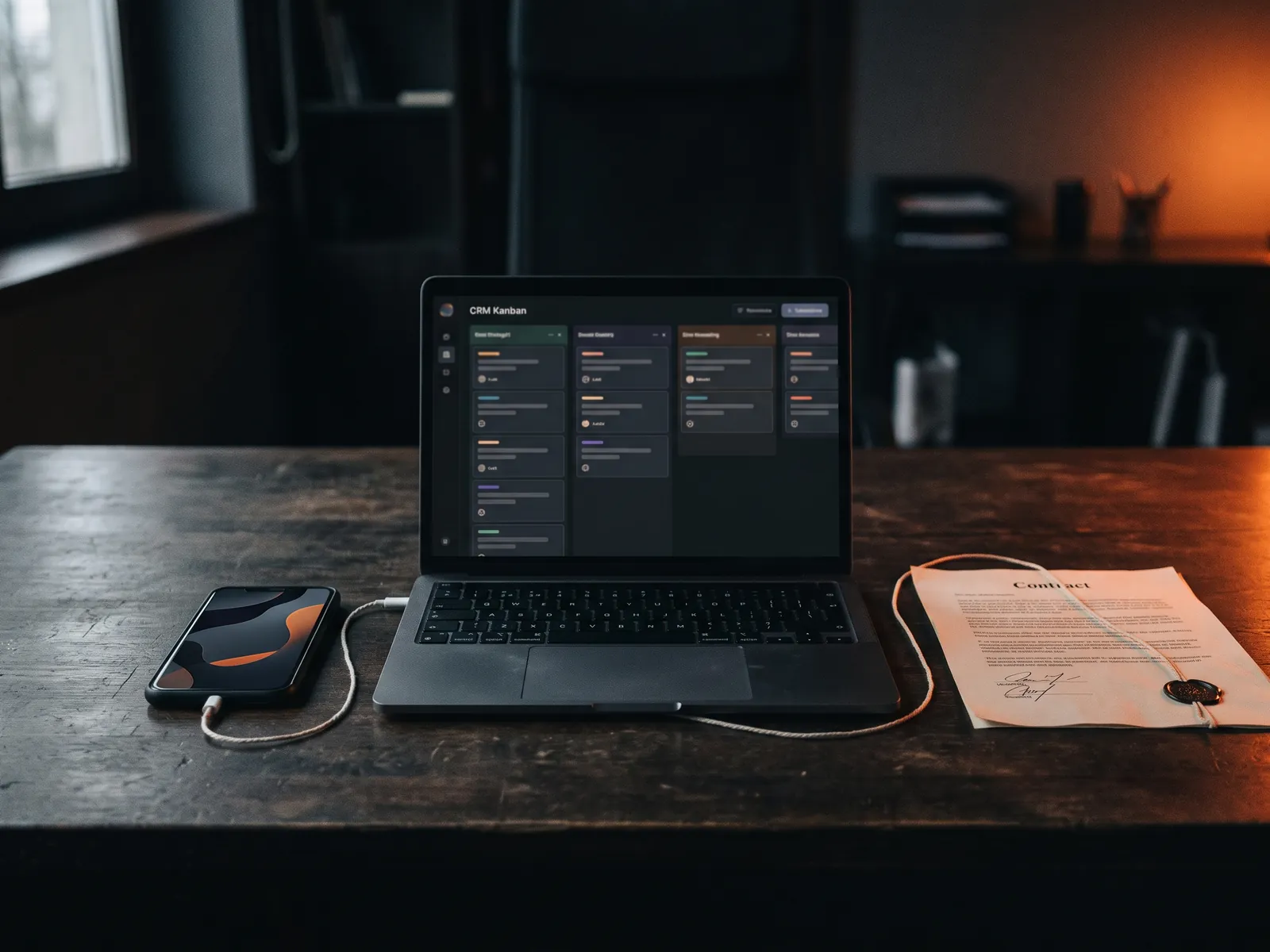
Lead numbers can look healthy while the business isn't growing. These are the usual reasons.
One channel produces lots of enquiries that never become customers; another produces fewer but better ones.
A kitchen, extension or legal case takes weeks from enquiry to signature, long after the ad platform has stopped looking.
Ads in one tool, enquiries in an inbox, quotes in a spreadsheet, invoices in accounting software.
From first click to paid invoice: every step, tool and person involved.
Every form, call and booking stores where it came from: campaign, keyword, page, click ID.
Leads land in a CRM with their source attached; stages track quote, won and lost.
Won deals and values sent back to Google Ads and Meta as offline conversions.
Revenue and cost per customer by channel in one Looker Studio report.
Prices in pounds sterling.
Connecting your ads, website, call tracking and CRM. Depends on the tools involved.
HubSpot, Pipedrive or Zoho set up with lead sources from the start.
A CRM built around how your business works, with source tracking built in.
Website with a 3D calculator and planner feeding a CRM, so each kitchen enquiry arrives with its details and source.
See the case study →Website and CRM in one system: enquiries from calculators and articles go straight into the pipeline.
See the case study →Most marketing measurement stops at the enquiry. GA4 counts the form, Google Ads counts the conversion, and everyone is happy. But a business doesn't run on enquiries; it runs on customers who pay. End-to-end analytics links the whole chain: the ad or search that brought someone in, the enquiry they made, the quote they received, whether they bought and how much they spent. With that, you can compare channels by revenue and profit rather than by lead count.
The difference often surprises owners. A channel that looks expensive per lead can turn out to be the cheapest per customer, because its leads are serious. A cheap source of leads can turn out to be mostly time-wasters.
End-to-end analytics isn't one tool. It's three pieces working together:
End-to-end analytics is worth the effort when customers are valuable and the sales cycle is long. A kitchen showroom in Surrey might wait six weeks between enquiry and signed order. A solicitor's conveyancing lead may take a month to instruct. A solar installer quotes after a survey. In each case, the ad platforms see the enquiry but never the sale, so they optimise for whoever fills in forms most readily. Feeding back actual sales teaches them to find people who buy.
For businesses with quick, low-value transactions, such as a takeaway or a salon, the standard setup and booking data are usually enough.
Connecting sales data to ad clicks involves personal data, so it needs doing carefully. Under UK GDPR you need a lawful basis, a privacy notice that explains the processing and sensible retention. Cookies and click IDs set in the browser fall under PECR consent rules. When sending conversions to ad platforms, I pass only what's needed, hashed where required. In sensitive sectors such as private healthcare or financial advice, I avoid sending anything that reveals the nature of the service.
At the end, you get a Looker Studio report that shows, by channel: spend, enquiries, customers won, revenue and cost per customer. It updates automatically from the CRM and ad platforms. Over a few months it becomes the basis for budget decisions: where to put the next thousand pounds, which campaign to pause, which service to promote. The article on customer lifetime value explains how to decide what a new customer is worth paying for.
I start by mapping your current journey and tools, then quote for the connections needed. If you don't have a CRM yet, setting one up comes first. Most projects take a few weeks, including a period of checking that numbers in the report match what your team sees day to day. Everything is built in accounts you own.
In practice, yes. Something has to record what happened to each lead after it arrived: quoted, won, lost, how much. A well-kept spreadsheet can work for very small volumes, but a CRM makes it reliable and lets data flow back to ad platforms automatically.
Sales that happen away from the website, such as a signed contract or a paid invoice, sent back to Google Ads or Meta and matched to the original click. The platforms then optimise towards customers who buy, not just people who fill in forms.
It pays off most where each customer is worth a lot and the sales cycle is long: kitchens, extensions, solar, legal work, B2B services, private healthcare. A café or a hairdresser usually doesn't need it; a firm whose average job is several thousand pounds often does.
Matching sales to ad clicks uses personal data, so you need a lawful basis, clear privacy information and, where cookies are involved, consent under PECR. I keep the data passed to ad platforms to the minimum and hashed. Your privacy notice should explain it; check the wording with your adviser.
Often, yes, either directly or through the CRM. Many owners find it simpler to mark deals as won in the CRM with the value, rather than linking accounting systems, and that's usually accurate enough for marketing decisions.
Tell me what tools you use now: ads, website, phone, CRM or spreadsheets. I'll reply within one working day with how I'd connect them.
What do you need most?