



Ad creative that works on a small budget
How to make ad creative that works on a small budget: what to film on a phone, how to write hooks and captions, how many versions to test and which UK rules to respect.
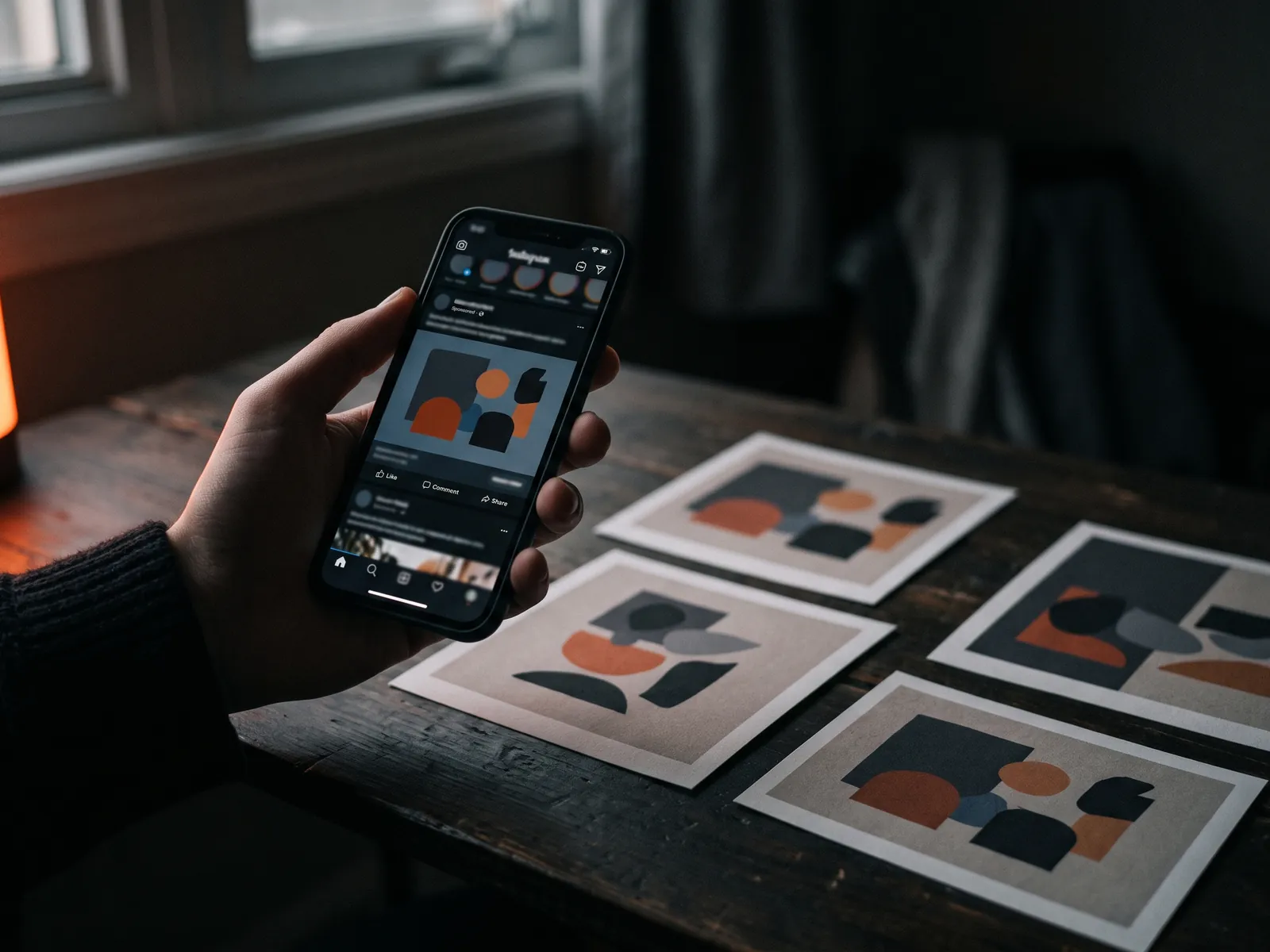
Ad creative that works on a small budget is rarely the most polished. It is clear, specific and obviously real: a phone video of your actual work, a photo of your actual team, a headline that says exactly what you do, where and for how much. On Facebook, Instagram and TikTok especially, the creative does much of the targeting: the right image and first line attract the right people and lower your cost per result. A small business can compete here without a production budget, provided it makes enough versions and keeps them honest.
This article covers what to make, how to make it with a phone and a free afternoon, how to test it, and the UK advertising rules that apply to every version.
Why creative matters more than settings
Ad platforms have automated much of the targeting and bidding. What they cannot automate is your message. When Meta or TikTok shows an ad, people's reactions (scrolling past, watching, tapping, hiding it) tell the system who the ad is for. A good ad finds its audience and gets cheaper; a weak one gets more expensive and reaches the wrong people. On Google search, ad text matters slightly differently, but relevance and a clear offer still lower costs.
What to make: five formats that work for small firms
- The result. The finished kitchen, the clean driveway, the haircut, the plated dish. Short video or a strong photo.
- Before and after. Powerful for trades, cleaning, gardening and renovation. For cosmetic and health treatments, be careful: images must be genuine and not exaggerate typical results, and some treatments can't be advertised to the public at all.
- The process. A sped-up clip of the job being done. People enjoy watching skilled work.
- The owner explains. You, to camera, for thirty seconds: what you do, who for, what it costs, how to book. Faces build trust.
- The customer's words. Genuine reviews shown as text on screen or, with permission, a customer talking about the result. Never invented, never paid without disclosure.
Making it with a phone
- Light: face a window or film outside on an overcast day. Avoid harsh overhead lights.
- Sound: for talking videos, a cheap clip-on microphone makes a huge difference; film somewhere quiet.
- Framing: vertical (9:16) for Stories, Reels and TikTok; square or 4:5 for feeds. Film vertical and crop if needed.
- Steadiness: a small tripod or a stack of books.
- Length: 10 to 30 seconds for most ads. Get to the point in the first two seconds.
- Captions: add them, since many people watch without sound. Phone apps and the ad platforms can generate them; check the spelling.
Free or low-cost design tools are fine for simple graphics, as long as the result looks like your business rather than a template everybody else uses.
Hooks and copy
The first line of text and the first second of video decide whether anyone sees the rest. Some patterns that work:
- Name the person: "Landlords in Leeds with an end-of-tenancy deadline this month."
- Name the problem: "Boiler making that banging noise again?"
- Show the number that matters: a from-price, a turnaround time, the area covered.
- Answer the doubt: "Fixed price, agreed before we start."
Keep the main text short and concrete. Put the important part first, because platforms cut long text with "See more". Write like you talk to customers, in plain British English, not like a brochure.
How many versions and how to test
On a small budget, you can't run scientific tests with dozens of variations. A practical approach:
| Stage | What to do |
|---|---|
| Launch | 3 to 5 ads in one ad set, each with a clearly different idea or hook |
| After 1 to 2 weeks | Pause the clear losers; keep the best two or three |
| Every 2 to 4 weeks | Add one or two new ideas, built on what worked |
| When frequency climbs | Refresh: new video, new first line, new photo |
Change one big thing between versions, such as the hook or the format, rather than small details like button colour. Judge on cost per result for your real goal, not on likes.
Google Ads creative
On Google search, "creative" means text: responsive search ads with up to 15 headlines and 4 descriptions, plus assets such as sitelinks, callouts, images and your logo. Write headlines that cover the service, the place, a proof point (years trading, accreditations, reviews) and a call to action. For Performance Max, Demand Gen and YouTube, real photos and short videos matter as much as on social. My beginner's guide to Google Ads covers the text side.
The UK rules that apply to every ad
The CAP Code applies to paid ads on every platform and to marketing claims on your own website. In short, ads must be legal, decent, honest and truthful. In practice:
- Claims need evidence. "Best", "cheapest" and "number one" need proof you could show the ASA.
- Prices must be honest. Include compulsory fees in the price shown, in line with the drip pricing rules under the DMCC Act.
- Health and beauty claims are tightly restricted; prescription-only medicines can't be advertised to the public.
- Reviews must be genuine, and incentivised reviews must be disclosed; fake reviews are banned outright.
- Influencer and creator content must be labelled as advertising when it is.
- Urgency must be real: "only 3 slots left" must be true.
Keep a simple swipe file
Save ads that stop you while you scroll, from any sector, in a folder on your phone. Note what made you stop: the first frame, the line of text, the person. When you plan the next batch, borrow the idea, not the execution. It is the cheapest creative training there is.
When to bring in help
Making creative yourself is entirely possible and often works better than glossy stock. Where help is worth paying for: when you need a steady supply of new videos, when the brand needs a consistent look across ads, or when you simply don't have time. I produce ad graphics and short video ads, quoted individually, and when I manage Meta ads (from £480/month) I plan creative refreshes as part of the work. If your ads are already running and stalling, Facebook ads not getting results is a good place to start.
Let’s talk
about your business
Before the call I review your website and ads. After the call you get an action plan and a price range in writing.

12+ years in online marketing, 100+ clients. I build websites, Google Ads and Meta ads campaigns, CRMs and automations for small and mid-sized businesses. About me →
Ad creative questions
Do I need professional photos for my ads?
Not necessarily. On social platforms, honest phone photos and videos of your real work often perform as well as or better than professional shoots, because they look native. Professional photography is worth it for product shops, premium services and websites. Make sure whatever you use is clear, well lit and actually yours.
How often should I change my ad creative?
When performance drops or frequency climbs, which for small local audiences can be every few weeks. Plan to add one or two new ideas every two to four weeks and pause the weakest. Larger audiences can run the same ads longer before they tire.
Can I use before-and-after photos in ads?
Usually, if they are genuine, unedited in ways that exaggerate the result and representative of what customers can expect. Cosmetic and health treatments face stricter rules and platform policies, and prescription-only treatments cannot be advertised to the public. When in doubt, check the CAP Code guidance for your sector.
Is stock photography bad for ads?
It is not banned, but it tends to perform worse because it looks generic and people recognise it. Stock images can also mislead if they suggest premises, staff or results that are not yours. Use them sparingly, for backgrounds or concepts, and show your real business wherever you can.
Need ads that look like
your business, not a template?
Tell me what you sell and where you advertise. I will reply within one working day with ideas for your first set of ads.