



Questions to ask a web designer
The 12 questions to ask a web designer before you sign anything, what good and bad answers sound like, and the red flags UK owners learn about the hard way.
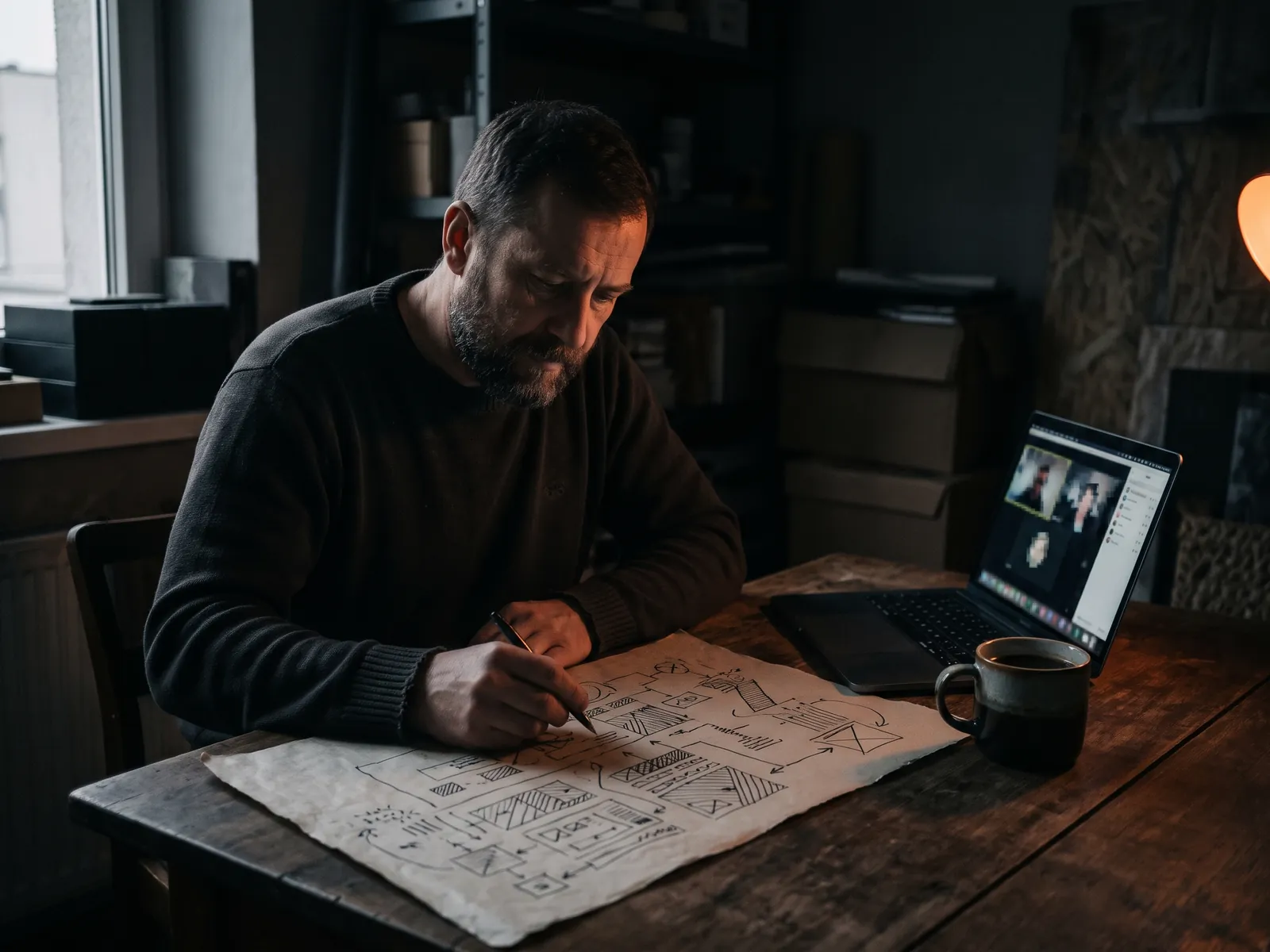
The questions to ask a web designer before you sign are mostly about what happens after launch, not about colours and fonts. Who owns the domain? Who writes the words? What does a change cost in six months? What if the deadline slips? A good web designer answers each of these in a sentence. Hesitation, vagueness or "we'll sort that out later" tells you more than any portfolio.
Here are the twelve questions I would ask if I were hiring someone, what a good answer sounds like, and the red flags many UK business owners have learned about the expensive way.
Ownership and control
1. Who will own the domain, hosting and code?
Good answer: "All of it is registered in your name or your company's name. I'll have access to do the work, but you are the owner."
Red flag: the designer registers the domain in their own name "to make things easier", or the site lives on their reseller hosting with no way to move it. If you ever part ways, getting your own website back can cost more than the build. My website ownership checklist goes through every item.
2. Can I move the site to someone else later?
Good answer: "Yes. You'll have the files, the database and the logins, and I'll hand over properly if you leave."
Red flag: the site is built on a proprietary platform that only the agency can edit.
3. Which platform will you build on, and why?
Good answer: a clear reason linked to your needs. Whether that is WordPress, a hosted builder, a hand-coded site or a custom CMS, the designer should explain the trade-offs: monthly costs, how you edit content, speed, and what happens when you want a feature the platform does not offer. I compare the main options in WordPress or a custom-built site.
Scope and content
4. Who writes the copy?
Good answer: "I write it from a call with you, and you approve it before design is finished", or a clear price for copywriting as a separate line.
Red flag: "content supplied by client" in the small print, with no mention until you are asked for twenty pages of text in week two.
5. What exactly is included in the price?
Ask for a list: number of pages, features, forms, integrations, tracking, revisions, launch tasks and support. Anything not on the list is an extra. Comparing quotes is impossible until you have this for each of them.
6. How many rounds of revisions do I get?
Good answer: a specific number. I include three rounds. "Unlimited revisions" sounds generous, but in practice it often means nobody agreed what was being built.
7. How will the site be set up for Google?
Good answer: page structure planned around your services and areas, clean page titles and descriptions, fast loading, redirects from your old site and submission to Search Console. Red flag: "SEO is included" with no explanation, or a promise of first place on Google. Nobody can honestly promise rankings.
Tracking and results
8. How will I know where enquiries come from?
Good answer: analytics and conversion tracking for calls, forms and bookings set up before launch, with consent handled properly under UK cookie rules. Red flag: "you can add Google Analytics later".
9. How will the site work on phones?
Good answer: designed mobile-first and tested on real devices, with a tappable phone number and a short form. Ask to see a previous project on your own phone during the call.
Money, deadlines and aftercare
10. How do payments work?
Good answer: staged payments linked to progress, such as a deposit, a middle payment and a final payment on completion. Mine are 30/40/30. Red flag: 100% up front, especially from someone you found on a marketplace an hour ago.
11. What is the deadline, and is it in the contract?
Good answer: a date in a written agreement, with what happens if it slips. With me, deadlines are written into the contract and late-delivery penalties can be added. Red flag: "usually a few weeks", with nothing in writing.
12. What happens after launch, and what will changes cost?
Good answer: a clear explanation of included support, how you edit the site yourself, and how later changes are priced. Red flag: a compulsory monthly fee for "maintenance" with no description of what it covers, or a long minimum contract.
Questions to ask about the person, not the website
A few more that are worth a minute on the call:
- Who will I actually speak to? With an agency, it may be an account manager who passes messages on. With a freelancer, it should be the person doing the work.
- How quickly do you reply? Get a specific answer. Mine is within one working day.
- Where are you based and when do you work? If the designer is abroad, ask about time zones. I work from Poland, which is one hour ahead of the UK, so calls happen in your normal working day.
- What did you build recently that is similar? Look at the live site, not a screenshot. Be wary of anyone who claims results they cannot show.
A simple scoring sheet
| Question | Clear answer | Vague answer | Red flag |
|---|---|---|---|
| Ownership | In your name | "Don't worry about it" | Registered to them |
| Copy | Included or priced | Unclear | Hidden in small print |
| Tracking | Set up at launch | "Later" | Not mentioned |
| Payments | Staged | 50/50 | 100% up front |
| Deadline | In the contract | Verbal | None |
Two or more red flags is a good reason to walk away, however nice the portfolio is.
Take notes during each call and fill in the sheet straight afterwards, while the answers are fresh. It is surprisingly easy to remember the friendliest person rather than the clearest answers, and the sheet keeps you honest when the quotes arrive a week later.
If you want to see how I answer all twelve in writing, look at how I work and my web design page, or put me to the test on a free call.
For background before those calls, see how much a website costs in the UK and what website care plans include.
Let’s talk
about your business
Before the call I review your website and ads. After the call you get an action plan and a price range in writing.

12+ years in online marketing, 100+ clients. I build websites, Google Ads and Meta ads campaigns, CRMs and automations for small and mid-sized businesses. About me →
Hiring a web
designer
Should I choose an agency or a freelancer?
It depends on the size of the project and how much contact you want. A freelancer usually means direct contact with the person doing the work and lower overheads; an agency brings a team, which suits larger firms with internal marketing staff. Ask the same twelve questions either way.
Is it a bad sign if a web designer has no reviews?
Not necessarily, especially if they are new to your market. Look at live sites they have built, ask what exactly they did on each, and judge the clarity of their answers and their contract. Be cautious of anyone with dozens of near-identical glowing reviews.
Should I ask for a fixed price or an hourly rate?
For a defined website project, a fixed price with a written scope is easier to budget and compare. Hourly rates make more sense for open-ended changes after launch.
What should be in the written agreement?
The scope (pages and features), the price and payment stages, deadlines, the number of revisions, who owns the domain, hosting and code, and what support is included after launch.
Put the 12 questions
to me on a free call
Book a free 30-minute consultation and ask anything on this list. You'll get straight answers and, if it fits, a written proposal within one working day.