01[01]
The business has moved on
You started doing domestic jobs and now win commercial contracts. The old look undersells you.
Ads and visibility: customers who are looking for your service now or don’t know about it yet.
01 Google AdsEnquiries from people searching for your service right nowfrom £480/mo 02 Social media adsMeta, TikTok, LinkedIn: customers who are not searching yetfrom £480/mo 03 SEOHigher in Google and Maps without paying per clickfrom £430/mo 04 Visibility in ChatGPT and AIYour business in AI assistant answerspart of SEO 05 Amazon, eBay and marketplacesSell where customers already buywith a partnerThe place where a visit turns into an enquiry, and a system that doesn’t lose that enquiry.
01 Web designA website that turns visits into enquirieslanding from £400 02 Online shopsCart, payments and shipping, ready for adsfrom £1,300 03 CRMNo enquiry gets lost in a phonesetup £620 04 Chatbots and AIThey answer customers, at night too£310 05 Email and SMSCustomers come back instead of forgetting youquoted individuallyPlan and tracking first, budget second. You know what works before you spend more.
01 Strategy and auditKnow where to spend the budget before you spend it£500 02 AnalyticsSee which ad brings in money£240 03 ConsultationsA call about your specific problem£25/h 04 Free auditA quick review and 3–5 priorities to start£0How your business looks and sounds before anyone calls you.
01 Social media managementProfiles that look like a real businesswith a partner 02 Creative and videoGraphics and videos that stop the thumbquoted individually 03 BrandingA logo and style that set you apartwith a partner Edmonton, Canada
website with a 3D calculator and a CRM
Boreal Kitchens
 Winnipeg, Canada
website and CRM in one system
Adela Strycharz, REALTOR®
 Żywiec, Poland
500+ page website and CRM for a chain
Gładko Tnący Barber
 Warsaw, Poland
website in 4 languages, calculators and CRM
MagCleaning
Rebranding for businesses that have outgrown how they look, changed what they do or merged with another firm. First an honest decision on whether you need a refresh or a full rebrand, then the new identity, then a switchover plan so the website, Google listing, signs, vans and paperwork all change without losing customers on the way.
Free: a 30-minute call, an action plan and a price range in writing.
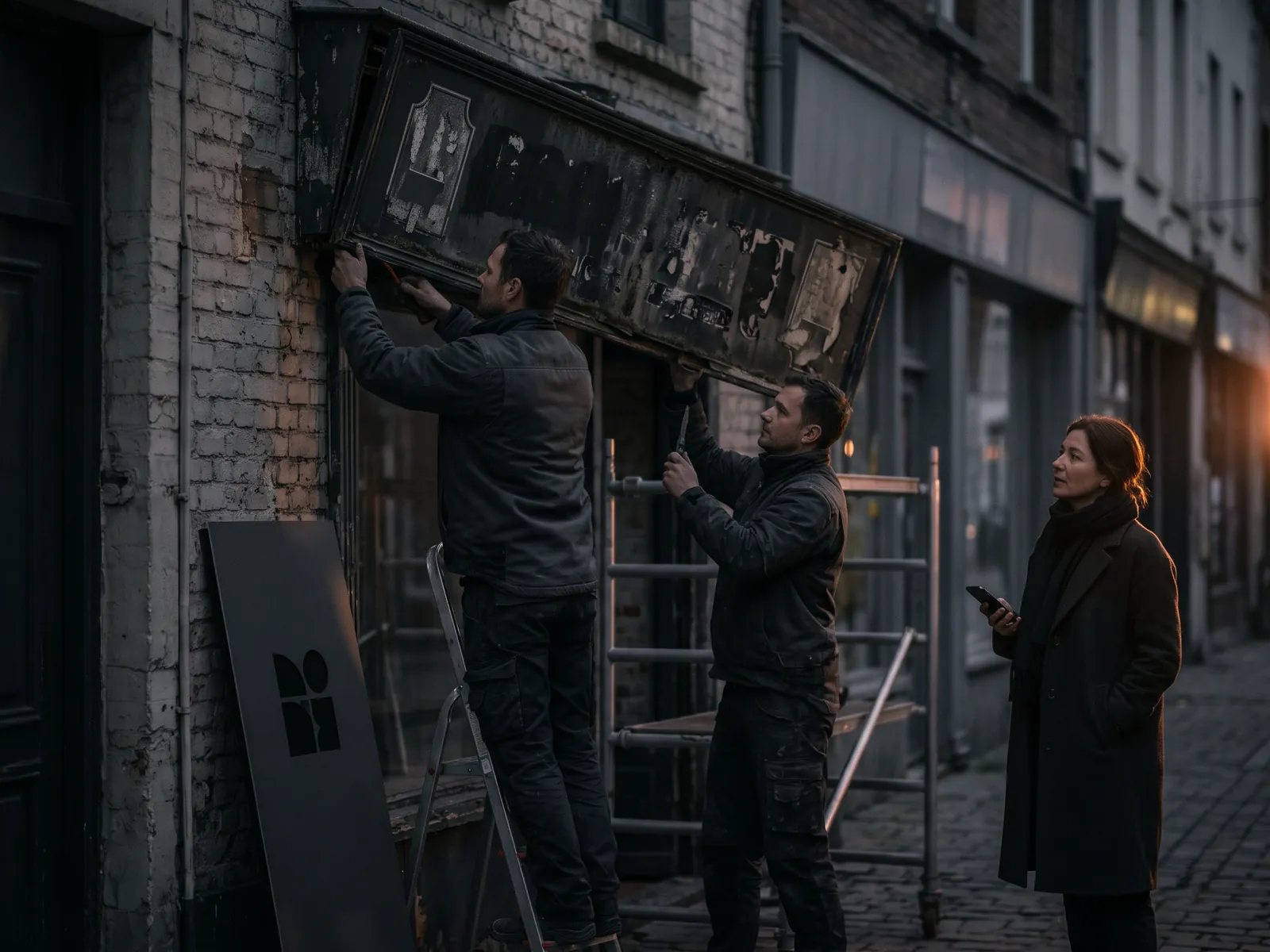
You started doing domestic jobs and now win commercial contracts. The old look undersells you.
Two firms become one, or a new owner takes over and needs a clear break with the past.
A trade mark dispute, a clash with a bigger company, or a name tied to a place or person that no longer fits.
A logo from the early 2000s that looks tired on a phone screen next to newer competitors.
Logo, colours and typeface come together into a system that works on your website, in ads and on your sign.
What customers recognise and value now, what is holding you back, and whether a refresh will do.
Name if needed, logo, colours, fonts and key templates, tested on your real materials.
A full list of everywhere the old brand appears, with an order, owners and dates for each change.
Website, Google Business Profile, social profiles and listings changed on the day; physical items as scheduled.
Checks on search rankings and directory listings in the weeks after, and old materials tracked down.
In pounds sterling. Rebranding is delivered with my trusted partner and quoted individually; the switchover plan is included.
Diagnosis, new identity, switchover plan and launch support.
Your website rebuilt by me in the new brand, keeping your domain and moving the content.
Website redesign→Rebranding is expensive in time and money, and not only for the design. Every sign, van, uniform, document, profile and listing has to change. So the first question is always whether you need it. Sometimes the honest answer is no: the brand is fine, it is just applied inconsistently, and brand guidelines with tidy templates will fix the problem for a fraction of the cost.
Rebranding makes sense when the brand actively holds the business back. You now chase commercial contracts with a logo designed for a one-person domestic service. Two businesses have merged. The name is tied to a town you have outgrown or a founder who has left. Or there is a legal problem with the name. In those cases, a well-planned rebrand is an investment.
A refresh keeps the name and the recognisable core of the logo, perhaps the colour or the symbol, and modernises the rest. Customers barely notice the change except that everything looks sharper. A full rebrand changes the name, the logo or both, and needs a proper announcement. A refresh is usually the safer choice for businesses with strong local recognition; a full rebrand for those whose current identity causes real problems.
The design is the visible part. The switchover is where most rebrands go wrong. Before launch, everything carrying the old brand is listed:
Each item gets an owner and a date. Online items usually change together on launch day; physical items follow as stock runs out or as sign makers are booked.
A rebrand that includes a new domain needs careful handling to keep your Google rankings. Every old page should redirect to its new equivalent, the Google Business Profile name should change once, cleanly, and directory listings should be updated so your name, address and phone number match everywhere. My article on redesigning without losing rankings explains the steps, and SEO for website migration covers the technical side when I build your new site.
A few things are worth checking early. If the registered company name changes, that goes through Companies House; many firms keep the Ltd name and simply trade under the new brand, which still needs to be shown correctly on invoices and the website. New signage may need advertisement consent from the local council, particularly if it is illuminated or the building is listed or in a conservation area. A new name should be checked on the UK IPO register before you commit; a solicitor can advise on whether to register it. Vehicle livery changes are quick, but book them in good time.
Pick the launch date with your trading year in mind. A garden centre should not switch brands on the Easter weekend, and a retailer should avoid the run-up to Christmas. A quiet month, often January or February for many trades, gives time to fix the small things that always crop up. Order new signs and vehicle graphics early, because sign makers and wrappers can have waiting lists, and keep a short list of old materials still in circulation so they can be replaced as they run out.
Rebranding is delivered with a trusted partner on the design side. I lead the diagnosis, the switchover plan and everything online: the website, listings, ads and social profiles. You have one point of contact and one written agreement with dates, and the copyright in the new designs is assigned to you.
A refresh keeps the name and the core of the logo but modernises it: cleaner lettering, a tighter colour palette, better files. A full rebrand changes the name, the logo or both. Refreshes are cheaper and keep existing recognition; full rebrands make sense when the old identity is actively holding you back.
It can, if the domain changes without proper redirects or the Google Business Profile name is changed carelessly. Done properly, with every old page redirected to its new equivalent and listings updated consistently, the effect is usually small and temporary. That planning is part of the switchover.
Sometimes. In England, many illuminated signs and some larger signs need advertisement consent from the local council, and listed buildings and conservation areas have stricter rules. Scotland, Wales and Northern Ireland have their own systems. Check with your council or sign maker before ordering.
Only if your registered company name changes. Many businesses trade under a different brand name and keep the Ltd name as it is; the legal name must still appear on invoices, your website and letters. If you are unsure which route suits you, ask your accountant or solicitor.
Simply and positively, with a reason. An email to existing customers, a post on social media, a note on the website and a line on invoices for a few months: "We are now X, same team, same service." Long explanations about the design are rarely needed. Customers mostly want to know nothing has changed for them.
Tell me what has changed in your business and what the current brand gets wrong. I will reply within one working day.